
Anticipating thermal runaway in electric vehicle batteries
As part of the tightening of environmental and safety requirements in the Brussels-Capital Region, underground car parks are now required to include charging infrastructure for electric vehicles.
While this development is fully in line with the energy transition, it also introduces new safety challenges, particularly those related to the use of lithium-ion batteries.
It is in this context that the Association of Co-owners of a building in Brussels, already equipped with a Dalemans gas detection system, sought our expertise to assess emerging risks and enhance the safety of its parking infrastructure.
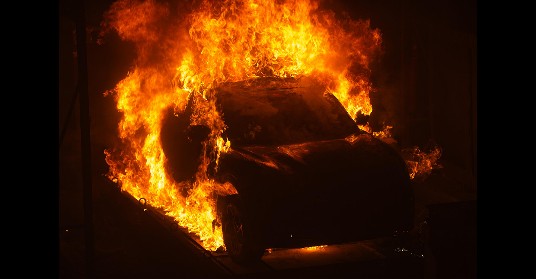
The risk analysis identified thermal runaway of batteries as a critical risk phenomenon in an underground parking infrastructure in a confined urban environment. This major failure mode can lead to a rapid and significant release of flammable gases, which can cause a fire or even an explosion.
Customer request
The customer did not initially express a need to install specific gas detection equipment. Its priority was to have a reliable solution that would provide early warning in the event of a battery failure in an electric vehicle, so that it could respond before a critical situation arose.
Choice of solution
Several technical publications and field reports indicate that, during the early stages of degradation, lithium-ion batteries emit specific gases—notably dimethyl carbonate (DMC) and ethyl methyl carbonate (EMC)—well before visible smoke or flames appear.
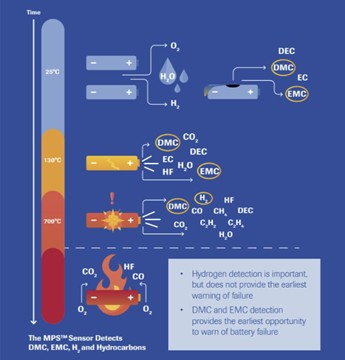
The implementation of a gas detection solution therefore makes it possible to identify these emissions at an extremely early stage, providing valuable reaction time to implement appropriate safety measures.
In this context, Dalemans has selected MPS™ sensor technology and integrated it into the new generation of D•CAN detectors for the targeted detection of these two gases, due to its key advantages in this constrained environment:
- rapid and accurate detection,
- high insensitivity to interfering gases present in parking garages,
- technically advanced solution at a controlled cost.
Implementation
As this technology is integrated into Dalemans' car parks and ventilation range, it was the optimal solution for limiting installation and maintenance costs, while maintaining a single point of contact for the entire gas detection system.
As a manufacturer, Dalemans was able to offer a specifically tailored detection solution, integrating it with existing on-site equipment. This approach ensured technological and operational continuity while limiting investment costs.
It was decided to install 30 detectors, at a rate of one detector for every two parking spaces, positioned in the immediate vicinity of the charging stations. The sensors were installed approximately 30 cm above the ground, as the gases detected are heavier than air.
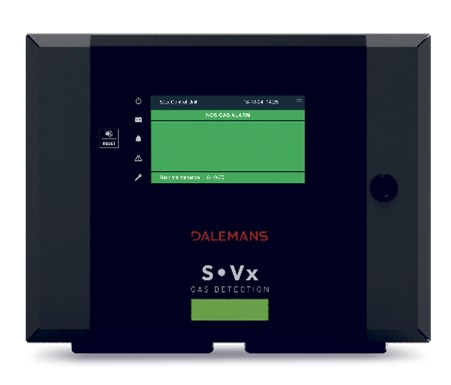
The detectors were connected via an addressable communication bus to an S•Vx control unit, already in service and integrating 30 CO detectors and 30 NO₂ detectors. The flexibility of the control unit allowed the addition of additional physical relays as well as the transmission of information to third-party systems via the Modbus protocol.
Conclusion
This project illustrates Dalemans' ability to support its customers in identifying and implementing the most relevant gas detection solutions, based on advanced and proven technologies that are seamlessly integrated into its product range.
Combined with an efficient after-sales service, this approach enables customers to comply with regulatory requirements, protect buildings and their occupants in the long term, and rely on a reliable and sustainable technical partner.